Account takeover
Unauthorized access to someone else’s account, typically achieved through stolen credentials or exploiting vulnerabilities. Attackers gain control of the account and may misuse it for financial gain or other malicious purposes.

AI data centers: A new era of data management
AI data centers are revolutionizing how we manage and process data. These advanced facilities use modern technologies that boost performance and scalability, making real-time analytics possible. With advances in generative AI, and now agentic AI, solidifying the role of AI as a central driver of innovation and operational efficiency, understanding the unique features and benefits of AI data centers is essential. This article explores what an AI data center is, its architecture, and the role it plays in shaping the future of data management.
What is an AI data center?
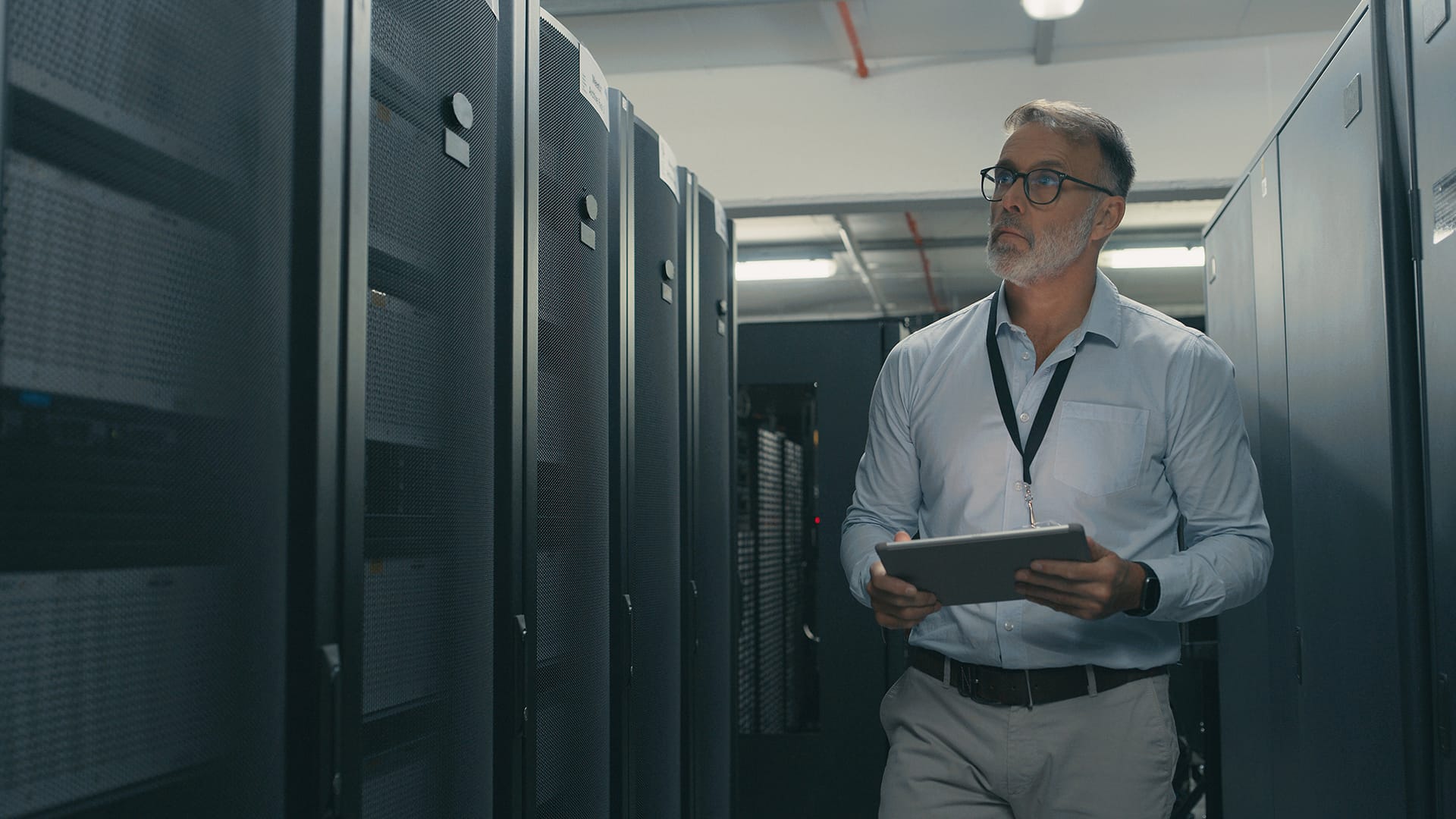
An AI data center is a specialized facility equipped to support artificial intelligence workloads, which require a combination of high computational power, massive data throughput and storage scalability, and energy efficiency measures to offset energy consumption. Unlike regular data centers, AI facilities are optimized for high-performance computing tasks, allowing quick data processing and analysis. They feature advanced hardware setups, such as GPUs and TPUs, which enhance the performance of machine learning and deep learning models. With these technologies, AI data centers ensure seamless data transfer and real-time processing.
AI data center architecture incorporates software-defined networking, unified network security measures, and hyperconverged infrastructure. These and other advanced solutions create adaptable environments for AI workloads, protect user data, and deliver edge computing and inferencing capabilities. Dynamic resource allocation and support for scaling operations are also needed. Automated tools help streamline workflows, reduce deployment times for AI models, and improve data management efficiency.
AI facilities face unique data processing and storage requirements. Robust storage solutions are vital to handle the rapid data growth from AI applications. AI data center infrastructure must ensure high availability and reliability, to make data easy to access for training and inferencing tasks. Smart data management strategies optimize performance while reducing costs, allowing organizations to fully leverage AI and gain a competitive edge.
What are the different kinds of AI data centers?
Types of AI data center deployment models
AI data centers come in three primary deployment models:
On-premises data centers provide organizations with complete control over their hardware and data center security, suitable for those with strict compliance needs.
Cloud-based AI facilities offer scalability and flexibility, allowing businesses to adjust quickly to evolving AI workloads.
Hybrid AI data center deployments combine the scalability and flexibility of cloud resources with the control, security, and low-latency performance of on-premises infrastructure. This enables organizations to optimize costs, meet compliance requirements, and support diverse workloads.
Physical infrastructure for AI data centers
Hyperscale and colocation infrastructure strategies are key in the evolving landscape of AI data centers. Hyperscale centers support large-scale operations typical of major cloud service providers, focusing on efficiency and scalability to manage vast data volumes. Colocation centers offer shared space, power, and cooling for multiple clients, helping to provide flexibility and cost savings for businesses not needing hyperscale solutions.
Each of these infrastructure strategies supports distinct needs of AI applications. Hyperscale facilities suit companies needing extensive processing power for AI training models, while colocation facilities cater to smaller-scale AI-driven applications, benefiting from shared infrastructure.