

Executive Summary
Felix Markets, an entity claiming to be a regulated forex broker, has been observed presenting false information about their regulatory status and legitimising their practice through sport sponsorship. Despite indicators of illegitimate business practices, they have become the official sponsor of Levante U.D., a Spanish football team in Spain’s highest tier for the 2025-26 season. Felix Markets has also impersonated other companies and repackaged their legal materials for the appearance of legitimacy. They have made various claims of geographic relevance to Australia, the UK, and Comoros, with indicators of Turkish language use. Their registration also relies on a fake financial authority which has been tied to other fake investment platform scams.
Background
The actor behind felixmarkets[.]com, appears to be exploiting the legitimacy of a registered company, Felix Markets Pty Ltd. The legitimately registered company is registered with the Australian Securities and Investments Commission (ASIC). While these may appear to represent the same company at first glance, the Australian government has issued an investor alert warning that felixmarkets[.]com has no relation to the legitimate company and may be attempting impersonation.
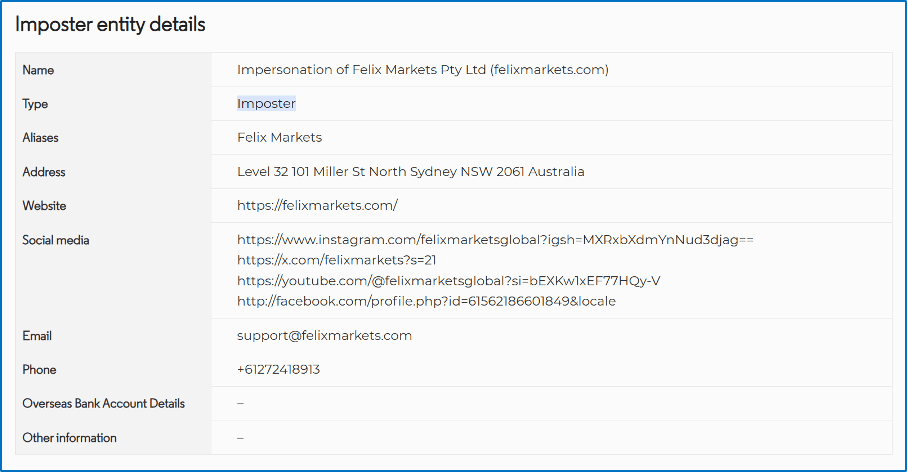
Figure 1. Investor alert from the Australian government’s Moneysmart platform (source).
This alert, issued on 01 July 2025, shows that the claimed business address at the time was in Sydney, Australia. Additionally, Felix Markets’ website had previously shown ASIC’s logo on their “Why Felix Markets” page. This changed in either late September or early October 2025 to show Mwali, a separate regulatory claim addressed in the next section.
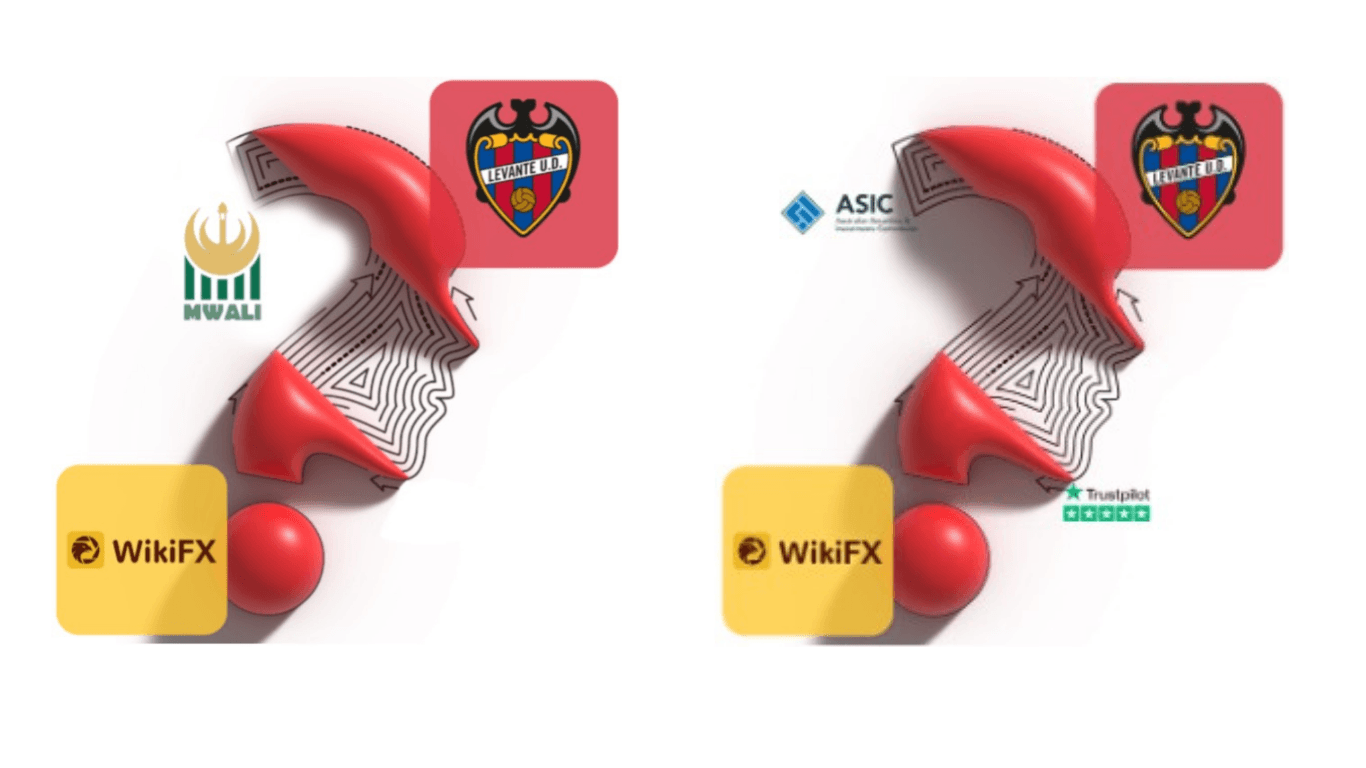
Figures 2a. and 2b. Graphics used at felixmarkets[.]com/about/why-felix-markets/
(left: previous, right: current at time of reporting).
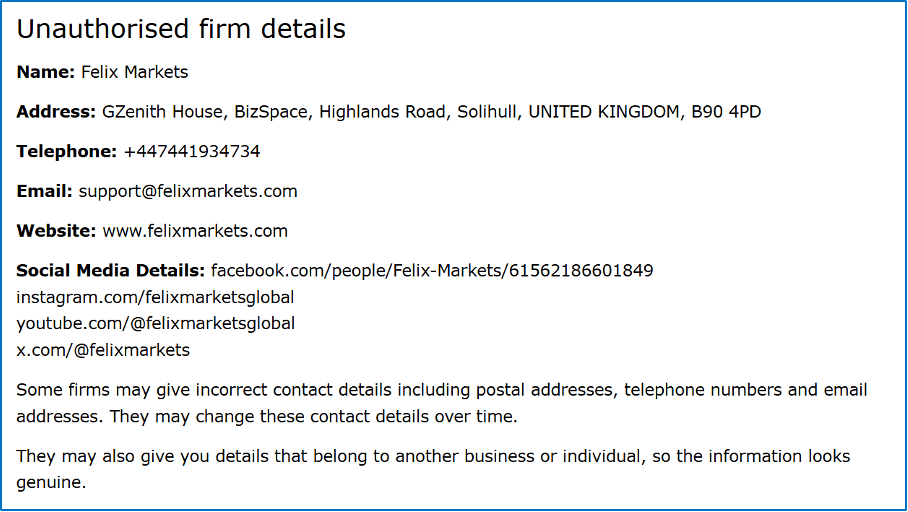
Figure 3. Archived warning from the UK Financial Conduct Authority, 05 February 2025 (source).
Faking Financial Authority
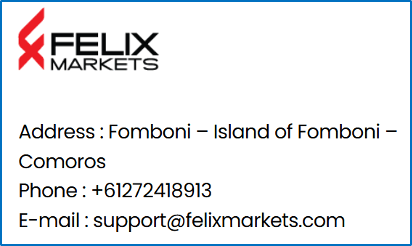
Figure 4. Listed address details on felixmarkets[.]com at time of publishing.
At time of reporting, the site at felixmarkets[.]com claims that the company is based in Comoros. The site offers a PDF purporting to show the company’s lawful registration in the Autonomous Island of Mwali (Mohéli) of the Union of Comoros via the Mwali International Services Authority (MISA). However, MISA is an example of an entirely fake regulatory authority. It does not exist as a government institution of the Union of the Comoros. This fake authority has been used for to legitimise several schemes across banking, asset management, crypto, and gambling. There are even several versions of this fake authority with slightly different domains which each have warnings to avoid the others.
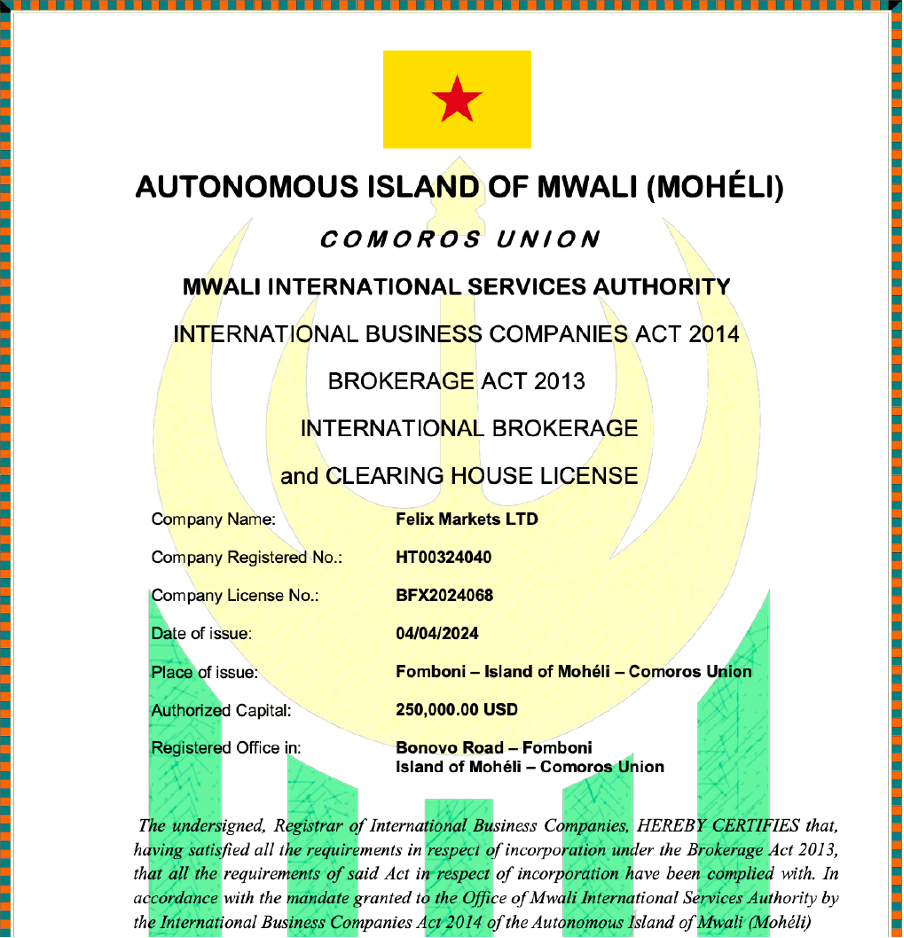
Figure 5. Part of MISA’s certification of incorporation of Felix Markets.
The bottom of Felix Markets’ incorporation papers, a QR code is used to direct users to MISA’s verification page for them. However, MISA uses the dynamic QR service qr.codes, which could allow dynamic changes to the links’ final content.
The verification pages themselves contain minimal information, often missing even the website of the entity MISA is claiming to verify. Verification pages also contain a warning that “Creating or maintaining any links from another website to this License Verifications page without our prior written permission is prohibited.” This may be to encourage clients to host their own fake paperwork and encourage verification only through the QR codes which can be monitored or redirected.
MISA’s fraudulent nature has been documented in past reporting surrounding the false bank GSB Gold Standard Bank (source)(source). Felix Markets was one of 199 entities listed by MISA as active brokerage companies at time of reporting.
This activity shows the opportunities created for scammers by piecemeal regulatory systems. Regulatory systems rely on interconnectedness and established trust. When systems are focused on domestic companies, this can allow bad actors to pose as financial systems abroad. This problem is exacerbated for financial groups that embrace cryptocurrency as these systems may push non-regulation and novelty as benefits, all the while making traditional regulatory systems less able to wrangle them. Cryptocurrency focused companies also typically rely on web platforms, forgoing traditional physical infrastructure. This creates opportunities to exploit rapidly changing, inconsistent, or false geographic claims.
Geographic Whack-a-Mole
Address claims have associated Felix Markets with Australia, the UK, and Comoros. The website itself is hosted with GoDaddy in Germany. However, there is indication of Turkish language use within document metadata. Felix Markets’ AML policy document includes the title metadata “Adsız doküman”, meaning “anonymous document” in Turkish. Additionally, the errors given for forms submitted without data note the mandatory fields in Turkish text.
Though language is not enough to conclusively identify the location of Felix Markets’ creator, it does create a potential geographic or cultural tie that is otherwise unseen in the site’s presentation or history of domicile claims.
Felix Markets hasn’t only relied on the reputation and regulatory status of Felix Markets Pty Ltd. It has also copied the documents of other seemingly legitimate forex trading brands. Felix Markets appears to have used find-and-replace on their terms of use document which had previously been the terms of use of AvaTrade, a Forex trading platform. While most sections of the document appear to have replaced AvaTrade Markets Ltd with Felix Markets, there are still sections where a shortened version of AvaTrade’s name remains in the text. The metadata of the document also includes the name Iain Webb, AvaTrade’s Compliance VP.
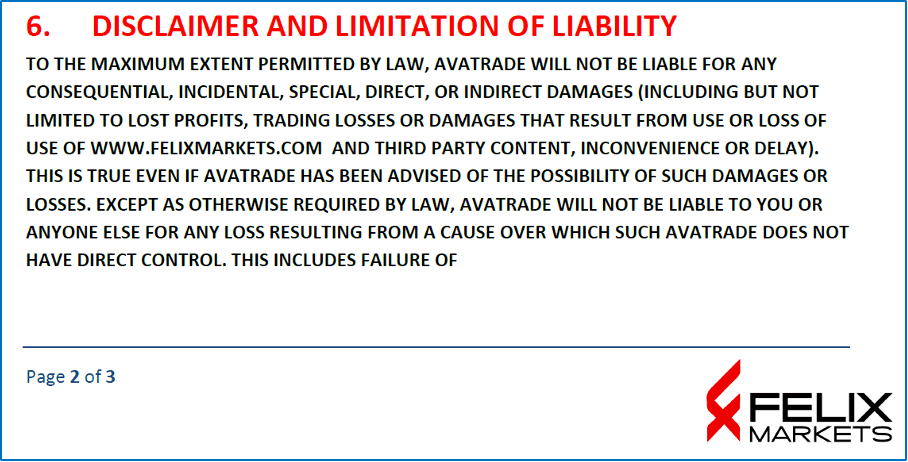
Figure 6. Excerpt from Felix Markets’ Terms of Use.
Felix Trader also shares verbiage in its Legal Entity Agreement document with the Client Agreement document of Blue Chip Broker. Blue Chip Broker appears to be another illegitimate brokerage. On their site, the displayed TrustPilot reviews are for other companies and the section in which they claim to be an award-winning brokerage actually shows illegibly small awards that were given to AvaTrade.
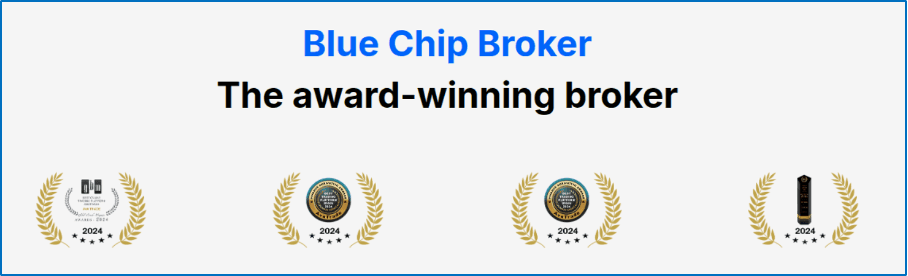
Figure 7. Blue Chip Broker’s website’s awards section which shows awards given to AvaTrade.
Blue Chip Broker’s domain was first registered on 26 February 2025 (source). It also falsely claims to be regulated by the Financial Sector Conduct Authority of South Africa (source). Given their recency, overlap in copying from AvaTrade, industry choice, and inferred scam type, it is possible that Blue Chip Broker and Felix Markets were created by the same person or group. However, there is not enough evidence to assess that likelihood with high confidence at this time.
Reputation Laundering using Sport
Sports have been an effective way for companies to get noticed by fans and rivals alike. There have been notable spikes in cryptocurrency-related sponsorships that follow market cap (source). These sponsorships have paved the way for other novel financial services and direct-to-fan advertisement.
Top crypto football sponsorships for the 2025-2026 season.
Sponsor | Sponsored Entity | League or Organization |
Crypto.com | UEFA | UEFA |
Crypto.com | Paris Saint-Germain | Ligue 1 |
OKX | Manchester City | Premier League |
Tezos | Manchester United | Premier League |
Kraken | Tottenham Hotspur | Premier League |
Kraken | RB Leipzig | Bundesliga |
Zondacrypto | Juventus | Serie A |
Felix Markets | Levante UD | LaLiga |
Bybit | Borussia Dortmund | Bundesliga |
With the expanding market for financial platforms, this creates a potential for reputation laundering, the practice of improving public perceptions by association with positively viewed institutions or actions. This can be done to improve the standing of unfavourable companies, countries, or individuals or even help negate criminal reputation by borrowing the perceived legitimacy of other groups. In sports, this practice has become known as sportswashing.
On 24 September 2024, Levante U.D. announced that they would be sponsored by Felix Markets in the coming season (source). The agreed length and cost of the deal have not been disclosed at this time. Felix Markets benefits from being able to claim association on their site as well as being a linked sponsor on the team’s site.
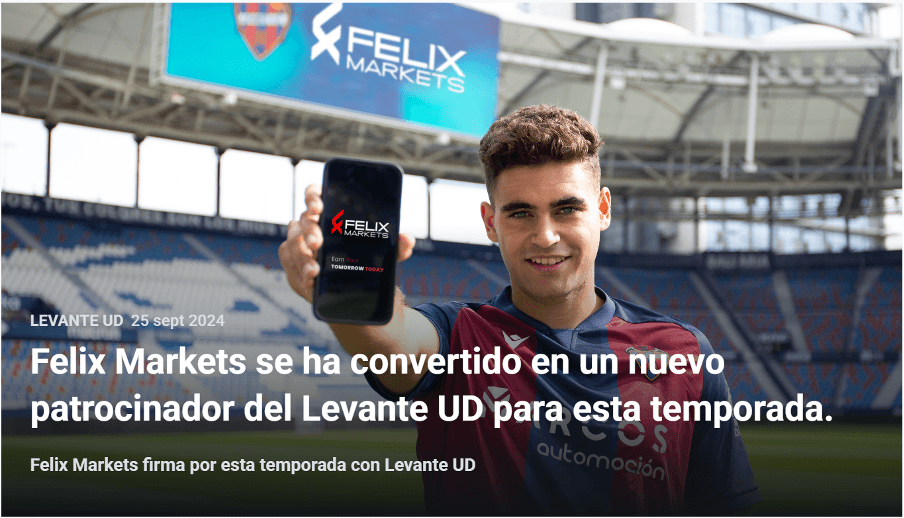
Figure 8. Announcement of the sponsorship deal on Levante UD’s website.
Source: https://www.levanteud.com/noticias/felix-markets-se-ha-convertido-en-un-nuevo-patrocinador-del-levante-ud-para-esta-temporada
Figure 9. Excerpt from Felix Markets’ website.
Source: felixmarkets[.]com/about/why-felix-markets/
While reputation laundering through sport has long been alleged, direct sponsorship is not a common method. Allegations often involve infiltrating fan clubs or ownership instead. In football, this has been seen with the involvement of the Italian mafia in hardcore fan groups of Serie A teams, foreign investment concerns in the UK’s Premier League, and host city choices for FIFA’s world cup.
Evolving Methods of Faking Legitimacy
Reputation laundering has long been a tactic used by irreputable entities. However, this activity shows a marked shift where a fraudulent entity purporting to be a private company is being platformed through team sponsorship. Direct sponsorship confers a sense of legitimacy by association. Sport continues to be a vehicle used for reputational gain and thus may require due diligence to ensure that only legitimate entities are advertised to fans. However, due diligence is complicated by entities like MISA.
The introduction of an entire fake financial authority like MISA, could fool fact checkers and support further oversight by groups trying to do legitimate due diligence. While there are several reputation checking services in the crypto trading space, MISA’s involvement has led to some, such as WikiBit, WikiFX, and FXverify, claiming that Felix Markets was legitimately regulated.
These findings draw attention to the need for due diligence in areas highly exploitable for reputation laundering, such as sport. This example also shows the issue of illegitimate “authorities” being able to bolster scams when international regulations leave gaps.