
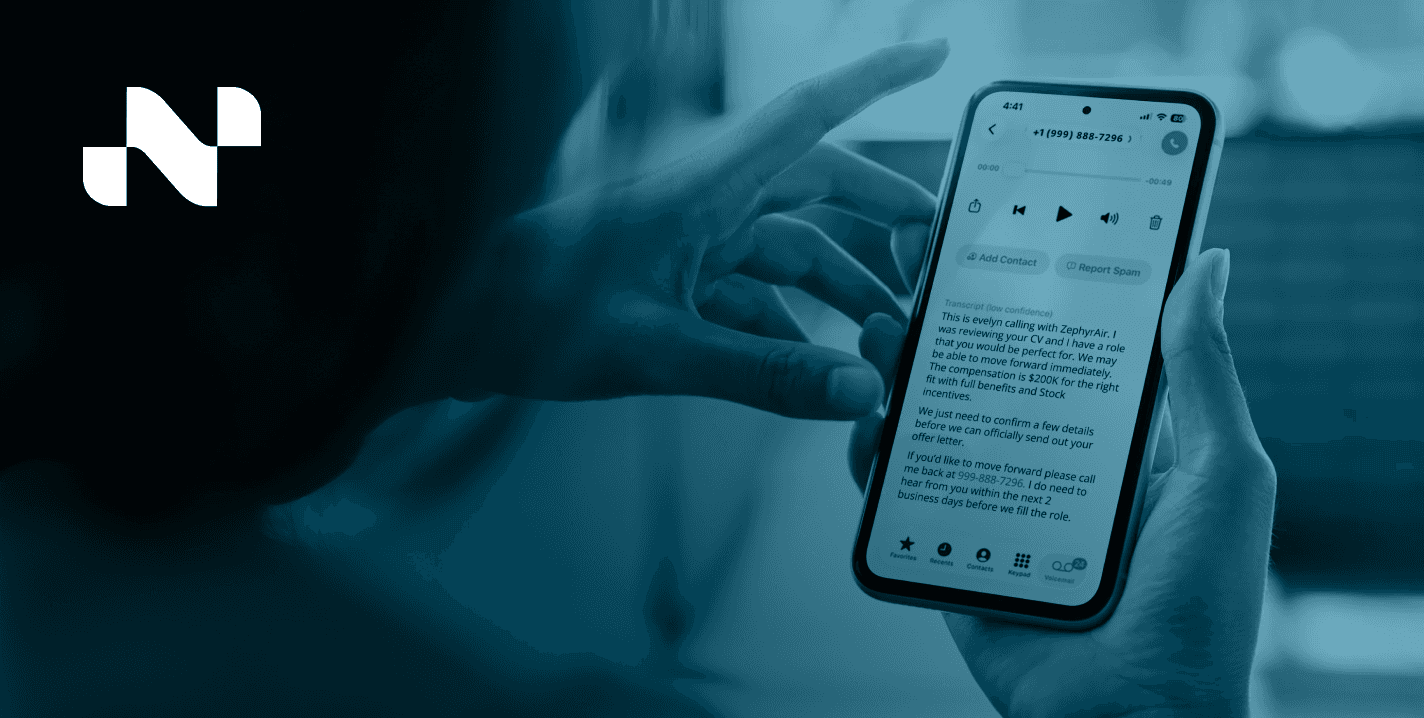
When people see an incoming call from their bank on caller ID, they’re usually quick to answer it because, well, that’s where their money is. When a professional-sounding voice informs them that suspicious activity has been detected on their account, few people question the need to verify their personal information immediately to protect their assets. We all want to act fast to ensure our money is safe, and that’s what criminals count on.
Phone scams have become one of the most persistent and damaging threats facing consumers today. According to the Federal Trade Commission, Americans reported losing more than $12.5 billion to fraud in 2024, representing a 25% increase over the previous year. While email tops the list of scammers' contact methods, the highest median losses – at $1,500 per victim – are generated through the second most common method of contact: phone-based scams.
Despite being so common and effective, most people don’t really understand what is happening on the other side of that call or text message. So, let’s pull back the curtain and take a look.
It's Not What You Think
Most people picture a lone criminal sitting in a basement somewhere, dialing numbers at random, but the reality is far more sophisticated. Modern phone scam operations often function as full-scale businesses, complete with shift schedules, training programs, and performance metrics. These aren't amateur operations run by opportunistic individuals. They're structured enterprises with clear hierarchies and defined roles.
These operations frequently establish themselves as legitimate-looking companies, sometimes even registering as software firms or digital service providers to gain access to business banking relationships and government incentives. In some cases, the workers handling calls may not even know they're participating in fraud, at least initially. They're given scripts, coached on objection handling, and trained to build rapport with targets just like many legitimate telemarketing jobs.
The infrastructure supporting these operations is equally sophisticated. Caller ID spoofing technology allows scammers to display any phone number they choose, making calls appear to originate from legitimate businesses, government agencies, or even your neighbor's number. When your phone shows an incoming call from "Social Security Administration" or your local police department, there's no guarantee that's who's calling. Sadly, caller ID is only useful if a caller WANTS you to know they are on the line.
The Playbook: Psychology Over Technology
The most effective criminal operations don't rely on sophisticated hacking or technical exploits. Instead, they leverage their understanding of how humans think and react under pressure. Scammers typically deploy a combination of psychological triggers that short-circuit rational decision-making, with the FTC identifying four consistent patterns:
Pretend to be from an organization you know.
Claim there's an urgent problem or prize.
Pressure you to act immediately.
Insist on specific payment methods.
Increasingly, these same psychological triggers are being delivered via text message, not just phone calls or email. Smishing campaigns impersonate banks, delivery companies, HR teams, and government agencies: using short, urgent messages and links to push victims into reacting before they can verify.
That sense of urgency isn't accidental. When someone tells you that your Social Security number has been used in drug trafficking and you'll be arrested within the hour unless you take immediate action, your brain's fight-or-flight response kicks in. Critical thinking takes a back seat to emotional reaction. You start making decisions based on fear rather than logic. Text-based scams are especially effective here because SMS feels personal and immediate, and the format discourages careful scrutiny. A two-line message like “Suspicious activity detected – verify now” can trigger the same panic response as a live caller, but with even less friction.
Authority plays an equally important role, as we’re conditioned from childhood to comply with figures of authority, whether that's law enforcement, government officials, or representatives from institutions we trust. Scammers exploit this conditioning ruthlessly, including impersonating IRS agents, bank security teams, and tech support personnel from well-known companies like Microsoft or Apple. They reference partial personal information, often gleaned from previous data breaches or public records, to establish credibility.
The psychological manipulation doesn't stop there. Some operations employ a good-cop/ bad-cop approach, transferring you between multiple "agents" who gradually escalate the pressure while occasionally offering a sympathetic ear. Others use reciprocity, providing small bits of seemingly helpful information before asking for sensitive data in return.
Fighting Back: What Actually Works
There are several easy-to-implement practices that put anyone in a better position to defend themselves against would-be scammers. Here are practical steps that make a difference.
First, recognize that legitimate organizations don't operate in the ways that scammers will attempt to conduct their business. Government agencies don’t call demanding immediate payment via gift cards or cryptocurrency, and banks don’t threaten to arrest customers who won't provide their account credentials over the phone. Any caller creating artificial urgency or threatening consequences is almost certainly running a scam.
Second, verify anything you are told independently. If someone claims to be calling from your bank, hang up and call the number on the back of your card. If you are supposedly talking with the IRS, end the call and contact them directly through their official website. In all cases, remember to NEVER use a callback number provided by the caller themselves.
Third, take advantage of call-blocking technology. The FCC has mandated implementation of STIR/SHAKEN, a caller ID authentication framework designed to verify that calls originate from the numbers displayed. While not perfect, this technology helps carriers identify and block spoofed calls before they reach you. Most major carriers now offer spam-filtering services, and your phone's built-in settings likely include options for silencing unknown callers.
Finally, and perhaps most importantly, talk about the scams you encounter, even if you’ve been a victim. Scammers thrive on isolation and shame. They'll specifically instruct victims not to discuss the situation with family or friends because they know that outside perspectives are often more objective, meaning they can help you identify the scam you weren’t seeing for yourself. If you receive a suspicious call, tell someone whose decision-making you trust before taking any action. That one conversation could save you from becoming the victim of a well-executed ruse.
The Bigger Picture
With AI-powered voice cloning and increasingly sophisticated social engineering, phone scams are growing, evolving, and becoming increasingly harder to detect. But understanding the machinery behind these operations, the psychology they exploit, and the practical defenses available gives you a fighting chance.
The next time your phone rings with an urgent message about your financial accounts, your taxes, or your computer, remember what's happening on the other end of that line. Someone is following a script designed to trigger your emotions and bypass your judgment. The most powerful response you have is to slow down, challenge them, and if they don’t act the way the legitimate organizations would, refuse to play along.