Neutralizing Agentic Threats: How DRP Solutions are Evolving in 2026



Artificial intelligence may be one of the single greatest assets and threats to companies in 2026. Yes, AI enables new operational efficiencies, automates repetitive tasks, and enhances customer experiences with predictive analytics and personalization. But, it also enables bad actors to more easily impersonate a brand, spin up phishing websites, and create convincing deepfakes that trick unsuspecting consumers and employees.
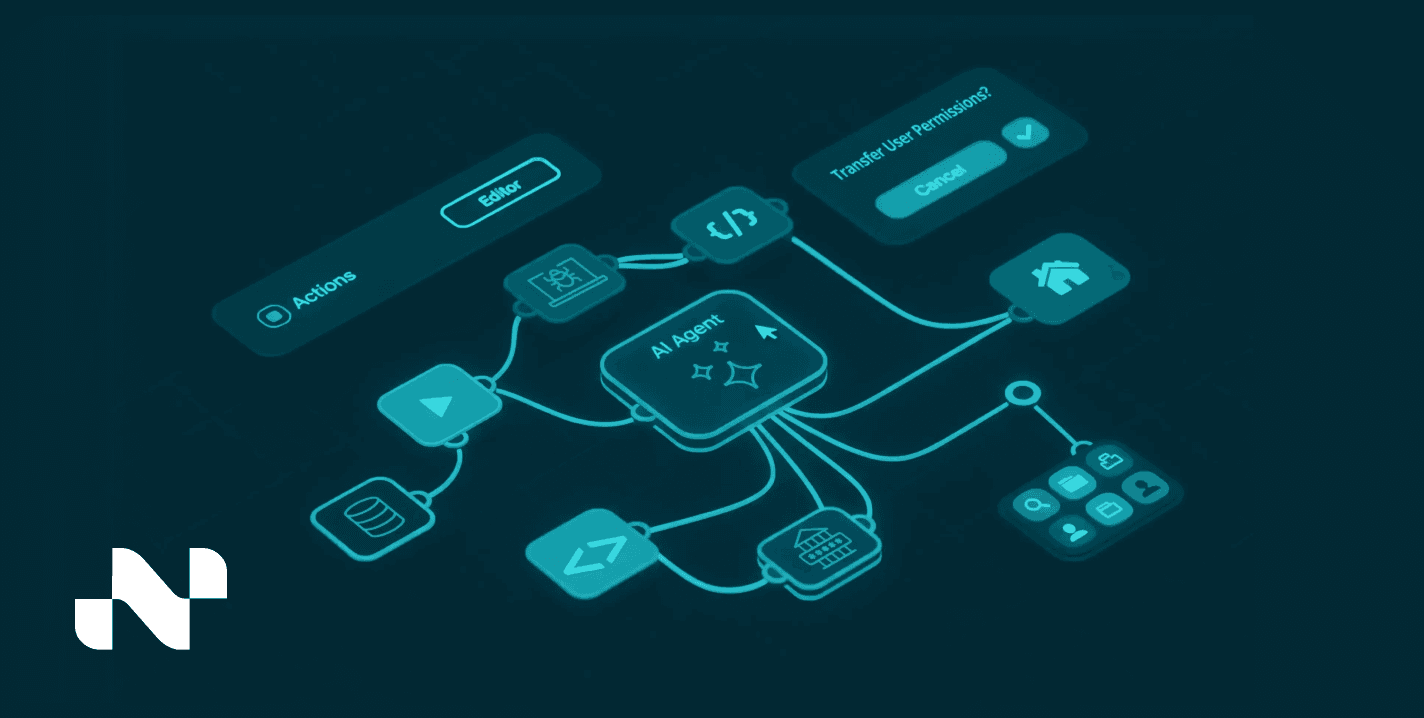
Agentic AI — autonomous AI systems that can independently plan, reason, and execute complex, multi-step tasks — has further changed the game for fraudsters, allowing them to create more sophisticated, high-speed, and automated attacks. But, agentic AI also enables organizations to move from passive, manual monitoring to an active, 24/7 proactive defense against cyberattacks and agentic AI threats.
The 2026 AI Threat Landscape
Artificial Intelligence has all but erased traditional "trust signals" in the marketplace. Today, AI-generated phishing attacks are nearly indistinguishable from authentic messages. In fact, a survey of 18,000 adults from around the globe found less than half could correctly identify a phishing email written by AI.
That’s alarming when you consider the scale of AI-generated phishing today. Nearly 82.6% of phishing emails now use AI language models or generators, according to Security Boulevard. And, these AI phishing attacks have a 60% success rate in fooling humans— with nearly four times more recipients clicking on malicious links than traditional phishing campaigns.
The rise of AI threats doesn’t just erode trust for business. It also increases the cost of a fraud attack. According to IBM’s 2025 Cost of a Data Breach report, the average cost of a data breach involving AI-powered attack tools — or targeting the organization’s AI — is $4.49 million. This is likely driven by the speed at which AI agents can exfiltrate data before traditional, manual detection systems can even trigger an alert.
Agentic AI threats use large language models (LLMs) and other algorithms to create and launch automated attacks that can adapt quickly and easily, learning from risk detection tools and countermeasures and evolving attack mechanisms in real time.
Here’s a sobering example of what these agentic AI threats can mean for businesses: Anthropic reported in November 2025 that threat actors were able to execute perhaps the first large-scale AI-orchestrated cyber espionage campaign where AI autonomously performed 80–90% of attack operations with minimal human intervention.
According to Anthropic’s report, the AI made thousands of requests, often multiple per second at the peak of the attack — an attack speed that would have been, for human hackers, simply impossible to match. All about AI said it best: this attack “wasn’t theoretical; it happened, it succeeded, and it’s changing everything we know about cyber warfare.”
We even asked ChatGPT about the rise of AI threats in 2026. It said, “the same models built to make work easier, creativity cheaper, and knowledge more accessible also make lying cheaper, fraud easier, and attacks more scalable.”
But, on the flip side, AI is also the best defense. As ChatGPT says, “the same pattern recognition that helps criminals find weaknesses helps defenders spot them. The same automation that launches attacks can shut them down.”
And, using AI to stop cyberthreats can significantly decrease the average cost of a data breach. IBM found organizations that didn’t use AI or automation had an average breach cost of $5.52 million, while those that used these technologies extensively had an average breach cost of $3.62 million. That’s an average savings of $1.9 million.
Let’s look at how digital risk protection solutions are evolving from passive "alerting" tools to active, autonomous defense layers using automation, AI, and human insights.
The Evolution of Digital Risk Protection: From Reactive to Predictive
While AI has become a force multiplier for bad actors, it is also the best resource to fight back against these agentic AI threats. To do this, digital risk protection (DRP) solutions are shifting from reactive detection tools to predictive, powerful defenses against these rising threats.
Advanced digital risk protection solutions are integrating AI to deliver stronger digital risk management at speed and scale — from identifying threats to shutting them down faster and with more accuracy.
Threat Disruption: Autonomous Takedowns and Response
Once a threat is identified, waiting for humans to take action is too slow. You simply can’t fight the speed and volume of autonomous AI attacks with manual takedown processes.
Advanced DRP solutions use agentic AI to automatically initiate takedowns of spoofed domains and social media accounts quickly. The ultimate goal is to reduce the dwell time of an attack to as close to zero as possible — meaning the attacker has zero time to act, adjust attack methods, or steal data.
Legacy Digital Risk Protection Solutions vs. AI-Enhanced Digital Risk Protection
Legacy DRP solutions were built for human attackers — designed to combat threats that were slower, more predictable, and human-driven. AI-enhanced DRP solutions are built for machine attackers. Agentic AI threats are fast, adaptive, and autonomous — and need a fast, adaptive, autonomous tool to combat them.
If you’re not already leveraging machine learning, predictive analytics and automated countermeasures, the time is now to re-evaluate your current digital risk protection solution. Here’s a brief comparison table that highlights some of the key differences between legacy and AI-enhanced DRP solutions:
Feature | Legacy Digital Risk Protection | AI-Enhanced Digital Risk Protection |
|---|---|---|
Phishing Detection | Based on rule-based alerts and static indicators (signatures, blacklists, etc.) | Behavioral and pattern-based detection using NLP that adapts in real time |
Data Leakage | Primarily relies on keyword scraping | Uses context and tone to make sense of leaked data or personally identifiable information (PII) |
Threat Analysis | Relies on manual reviews, ticketing, and escalations | Automated correlation, scoring, and prioritization |
Takedown Speed | Takes days, relying on manual analysis and ticketing processes | Takes seconds to minutes to block, leveraging autonomous triage and containment to completely remove an attack within hours |
Dark Web Intelligence | Static reports based on keywords and list-based searches | Real-time predictive risk scoring using contextual and intent-based intelligence gathering |
Scalability | Limited by headcount and resources | Scales with data volume and threat velocity |
Moving Toward "Autonomy with Control"
Digital risk protection in 2026 isn’t just about finding and plugging leaks. To successfully protect your brand and customers, you cannot fight machine-speed attacks with human-speed responses.
The best defense against AI threats is an automated offense. By leveraging predictive analytics and AI-powered DRP solutions, you can anticipate an attack before it’s even launched.
Netcraft’s brand protection platform is trusted by top organizations worldwide to see more threats and stop them faster. Explore the platform to learn more.