
From Fake Apps to Dark Web Leaks: 5 Channels Your DRP Service Should Monitor




The definition of an organization’s public attack surface has changed.
It no longer ends at corporate infrastructure or externally exposed assets. Instead, it includes every digital platform where your brand appears — from mobile app marketplaces and social media platforms to paid search ads and dark web forums.
Digital Risk Protection (DRP) services extend beyond traditional attack surface monitoring to address this expanded threat landscape. In this post, we’ll outline the 5 critical channels a modern DRP service should monitor and why comprehensive coverage is essential in 2026.
The 2026 "Public Attack Surface"
Today, an organization’s public attack surface includes every external channel where customers, employees, and partners interact with its brand. And, the industrialization of phishing kits, infostealer malware, and AI-generated impersonation has dramatically lowered the barrier to entry for brand abuse.
Now, these external channels are routinely exploited by threat actors who use automation and AI-enabled tooling to launch coordinated, multi-channel impersonation campaigns at scale.
The impact extends beyond isolated fraud losses. Brand impersonation campaigns can drive regulatory scrutiny, increase customer support volume, distort paid marketing performance, and damage executive reputations — often before security teams detect the activity.
Manual monitoring and traditional External Attack Surface Management (EASM) cannot keep pace with this environment. A modern Digital Risk Protection (DRP) service should continuously monitor all critical areas of a company’s public attack surface, including:
Which channels does a DRP service monitor? A modern Digital Risk Protection service monitors five key areas: rogue mobile apps, social media and messaging platforms, paid ad networks, domain and web impersonations, and deep and dark web ecosystems. |
|---|
The 5 Critical Monitoring Channels
Each of the areas mentioned above represent distinct external attack vectors for brand abuse and credential compromise.
Unauthorized mobile applications remain a persistent risk, particularly outside of official app stores. These fake apps are created by threat actors to mimic the look and functionality of legitimate applications — often with the intent to harvest sensitive information or gain unauthorized access. (See example below)
In many cases, impersonating apps commonly request excessive permissions — including access to contacts, SMS messages, location data, or accessibility services — to harvest sensitive information or intercept multi-factor authentication codes.
While Apple and Google maintain security review processes, mobile applications distributed through third-party APK sites and unofficial repositories bypass these controls. As a result, organizations must monitor beyond official app stores.
Effective DRP requires external discovery capabilities that continuously scan global app marketplaces for unauthorized copies of your app, often modified to contain malware.

Figure 1. A fake banking app (left) available to download on a third-party app store, and the genuine app available on the Google Play store.
Social media platforms are frequently used to create fraudulent business profiles, impersonate executives, and distribute malicious links. The barrier to entry is low, and AI-generated personas make impersonation increasingly convincing.
At the same time, encrypted messaging services such as Telegram and WhatsApp have become coordination hubs for phishing campaigns and credential trading. For example, Netcraft previously reported on recruitment scams leveraging WhatsApp, Telegram, iMessage, RCS, and SMS to contact victims directly. These “task scams” impersonated legitimate employers to extract payments and personal information.
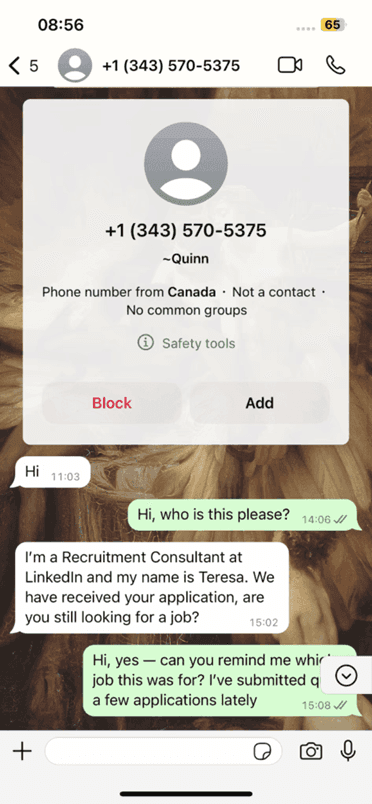
Figure 2. First engagement via WhatsApp between a threat actor and their target recipient in a recruitment scam.
Beyond written content, AI-generated profile images and synthetic voice messages enable attackers to convincingly imitate leadership teams. In parallel, automated bot networks post fraudulent “support” links and promotional scams beneath legitimate brand content, exploiting user trust in familiar platforms.
Because these campaigns unfold across both public and encrypted channels, detection and disruption can be complex. Comprehensive DRP services must monitor visible profiles, impersonation patterns, and coordinated engagement activity across platforms.
Paid search and social advertising platforms are routinely abused to intercept brand-driven traffic.
Threat actors frequently bid on branded search terms through platforms such as Google and Microsoft Bing. These fake ads often appear above legitimate organic search results and redirect users to fraudulent login portals, fake checkout pages, or imitation customer support sites.
In many cases, malicious advertisements promote fraudulent help desk numbers or “account recovery” services. Victims are encouraged to install remote access software or disclose sensitive credentials under the assumption they are interacting with the legitimate organization.
In addition, because sponsored placements carry an inherent level of trust, users may be less likely to question the authenticity of these links.
DRP services must monitor brand keyword bidding activity, ad creative content, and associated landing page infrastructure to identify and disrupt malicious campaigns quickly.
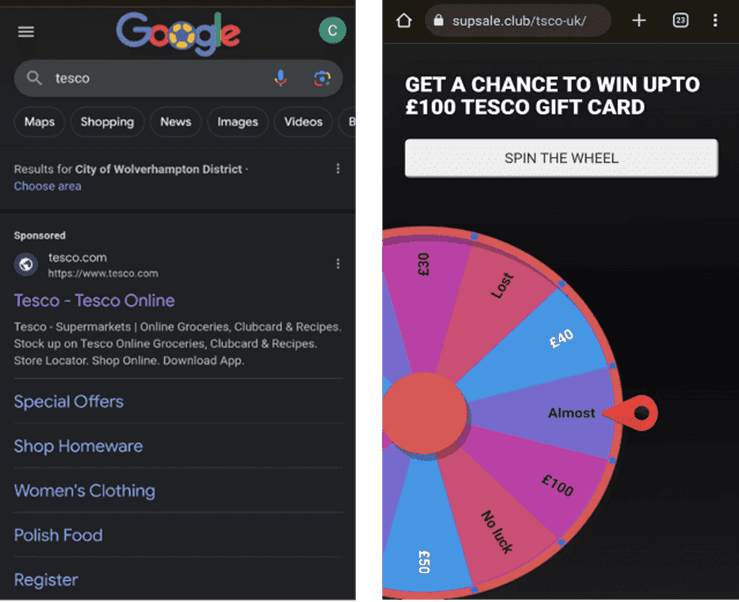
Figure 3. A screenshot of malicious advert for a Tesco affiliate scam, hosted on hxxps://supsale[.]club/tsco-uk/
Phishing domains and cloned websites remain among the most effective methods of brand impersonation. Threat actors routinely register look-alike domains that rely on subtle character substitutions to deceive users.
Even low-complexity homoglyph techniques (i.e. substituting “rn” for “m”) continue to succeed because they exploit visual similarity and user inattention. Recent campaigns have also demonstrated the resurgence of legacy tactics, including abuse of basic authentication URLs to mask malicious destinations.
Beyond simple look-alike domains, attackers increasingly replicate entire websites — including layouts, branding, forms, and styling assets — to create near-perfect copies that host credential-harvesting login pages. These cloned “shadow sites” can be deployed rapidly and at scale as part of coordinated phishing campaigns.
Effective DRP requires proactive monitoring of certificate transparency logs, newly registered domains, DNS feeds, and hosting infrastructure patterns. By prioritizing domain protection through early detection, organizations can identify and disrupt malicious domains before campaigns gain traction, reducing both exposure time and customer impact.
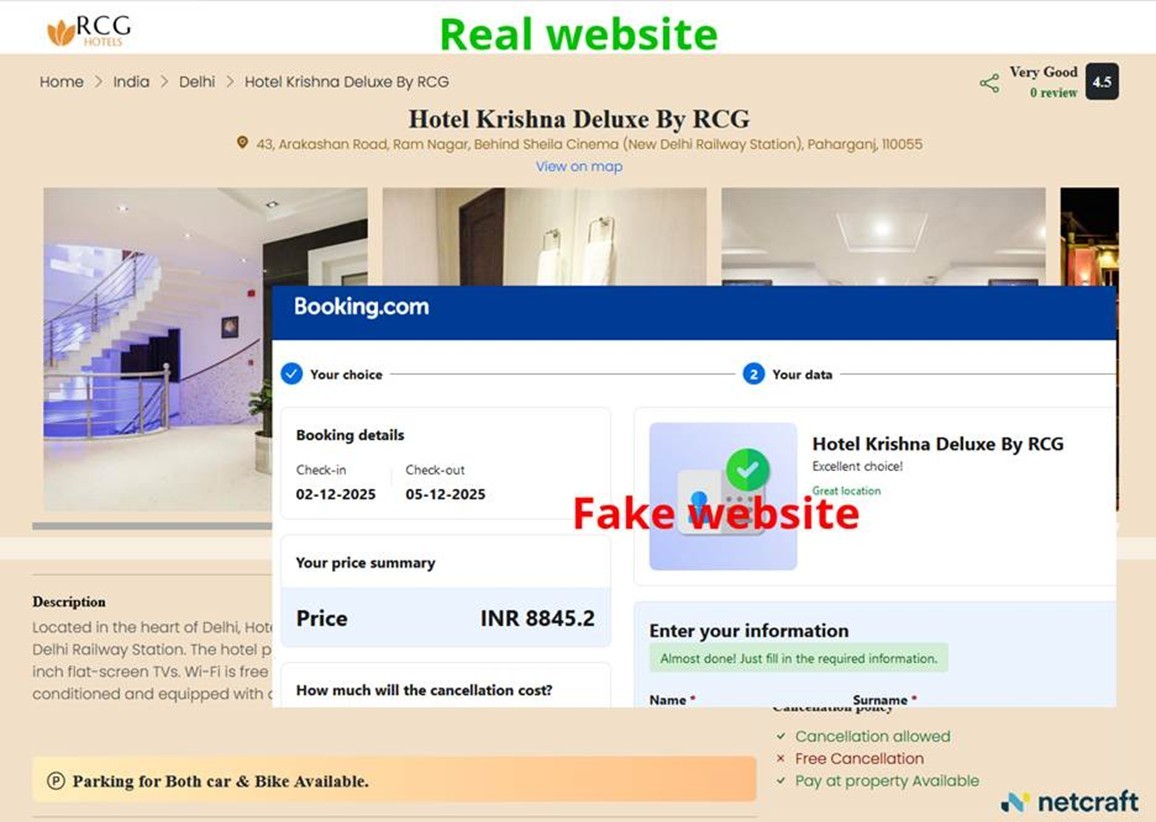
Figure 4. Example of a real hotel site and an impersonation site created by attackers.
Not all brand exposure is visible on the surface web. Deep and dark web resources facilitate the trade of stolen credentials, database leaks, phishing kits, and infrastructure access — often well before incidents are publicly reported.
Infostealer malware, for example, extracts browser-stored credentials and session tokens from infected devices. The resulting “log” files are packaged and sold in bulk, frequently containing valid credentials long before affected organizations are aware of compromise. These logs fuel account takeover campaigns and downstream fraud.
Threat actors also distribute brand-specific phishing kits designed to impersonate targeted organizations. These kits include logos, page templates, and recommended domain structures, significantly lowering the technical barrier to launching impersonation campaigns.
Comprehensive DRP extends beyond identifying leaked data. Dark web monitoring of underground forums and threat actor discussions provides early warning when specific industries or organizations are being targeted, enabling security teams to act before campaigns escalate.
Centralizing Your Defense
Monitoring these 5 distinct channels should not require 5 separate tools, workflows, or reporting structures. Fragmented visibility creates operational gaps, delays remediation, and makes it difficult to assess overall risk posture.
A company’s Digital Risk Protection strategy must unify detection, intelligence, and disruption across the full public attack surface. Isolated alerts are not enough — and alerting alone does not mitigate risk.
Identifying a fraudulent app, domain, or advertisement is only the first step. Organizations require the operational capability to rapidly disrupt malicious infrastructure at scale.
Effective DRP services include integrated takedown workflows and automated disruption capabilities to remove malicious infrastructure quickly. Unified DRP and takedown services can reduce time-to-mitigation from weeks to hours. For example, Netcraft’s median phishing takedown time is 33 minutes.
Bottom line: protecting your brand is not simply a monitoring exercise. It requires continuous visibility across the public attack surface and the operational capability to act decisively.
Request a personalized demo today to see how Netcraft's comprehensive DRP platform identifies, tracks, and eliminates threats across all 5 critical channels.
Frequently Asked Questions
Which digital environments require the most active monitoring to prevent brand abuse?
Effective protection requires constant surveillance of five high-traffic channels: malicious mobile apps, social media impersonations, "malvertising" in paid search, fraudulent web domains, and the dark web marketplaces where stolen data is traded.
Why do rogue mobile apps pose a security risk?
Fake apps mimic legitimate applications to harvest sensitive information or gain unauthorized system access, often requesting excessive permissions to intercept multi-factor authentication codes or access contacts and location data.
How are paid ad networks exploited by threat actors?
Threat actors bid on branded search terms through platforms like Google and Microsoft Bing, placing sponsored ads above legitimate results that redirect users to fraudulent login portals, fake checkout pages, or imitation customer support sites.
What threats are found on the deep and dark web?
Deep and dark web resources facilitate the trade of stolen credentials, database leaks, phishing kits, and infrastructure access, often containing valid credentials from infostealer malware before organizations are aware of compromise
What makes domain impersonation effective?
Phishing domains use subtle character substitutions and homoglyph techniques to create look-alike domains, while attackers replicate entire websites with layouts, branding, and forms to create near-perfect credential-harvesting copies.


