Updated: August 3, 2026
Online brand protection is how organizations find and act on threats that misuse their name, logos, products, or other brand assets online. That includes phishing sites, fake social profiles, fraudulent stores, malicious ads, and rogue mobile apps.
It is not just about spotting a suspicious mention. Effective brand protection verifies whether the activity is harmful, helps reduce exposure while action is taken, and works toward removing the threat altogether.
This guide explains the most common forms of online brand abuse and what organizations should look for in an effective response.
Why protect your digital brands?
Online brand abuse now carries a measurable financial cost. Consumers reported losing $3.5 billion to impersonation scams in 2025, making impersonation the most commonly reported form of fraud to the US Federal Trade Commission. Counterfeit goods also represented an estimated $467 billion in global trade, according to the OECD and EUIPO’s latest assessment.
The scale of the problem continues to grow as attackers spread campaigns across more digital channels and make greater use of automation. Brand owners therefore need to detect misuse quickly, verify whether it is harmful, and act before the threat reaches more customers.
This means that brand owners must now work harder than ever to protect their brand and its intellectual property across many digital channels. Online brand protection detects instances of brand abuse (including impersonation attempts, fraud campaigns and product counterfeiting), and disrupting the threats to protect your brand’s integrity, employees, and customers.
Cybercriminals will exploit your brand wherever they can, usually through phishing sites, fake shops, online advertisements, social media profiles, rogue mobile apps and emails. Online brand protection will therefore require:
a platform operating autonomously, 24/7, across a multitude of different data sources
search capabilities that detect misuse of your brand’s name and likeness, whether that’s the name, logo, tagline, domain or social media profile
the ability to disrupt and takedown attacks that are abusing your brand in real-time – ideally within minutes – so the damage to your organization is minimized
How online brand protection differs from related disciplines
Discipline | What it focuses on | What it delivers |
|---|---|---|
Online brand protection | Harmful or unauthorized use of a brand online | Detection, verification, disruption, and removal |
Mentions of a brand and signs of possible misuse | Visibility into activity that may need investigation | |
Reputation management | Reviews, sentiment, and public perception | Support for protecting and improving brand trust |
External threats affecting the organization, its people, customers, and digital assets | Broader detection and response across multiple threat types and channels |
How can cyber criminals exploit your brand?
Cybercriminals exploit trusted brands because familiarity lowers suspicion. They copy names, logos, websites, products, executives, and customer communications to make fraudulent activity appear legitimate.
The financial impact can be significant. In 2025, the FBI’s Internet Crime Complaint Center received reports of more than $20 billion in cybercrime losses, with investment fraud, business email compromise, and tech-support scams accounting for the largest shares.
Online brand abuse can appear across several channels, often as part of the same campaign. A fake social profile may promote a fraudulent store, a malicious ad may direct customers to a phishing site, or a rogue mobile app may impersonate a legitimate service to steal credentials.
Here are some of the most common techniques.
Fake shops
Claiming to offer highly discounted goods, fraudulent online stores (or fake shops) impersonate the websites of luxury brands and established retailers. These shops are often a front to capture payment details (and other sensitive information) that users submit at the checkout stage of the transaction. These details can then be used to create convincing phishing attacks (which we discuss later) or sold on to other cybercriminals. Any goods that do end up being delivered, are very likely to be counterfeit.
Fake shops don’t just harm your existing customers; they drive potential traffic from legitimate retail outlets and cost brands financially and in terms of reputational damage. The scale can be concentrated in a small amount of criminal infrastructure. In 2026, Netcraft identified 16,700 active fake shops connected to a single bulletproof hosting network. During the 2024 holiday shopping period, Netcraft also detected more than 9,000 new fake-store domains in four days on one ecommerce platform alone.
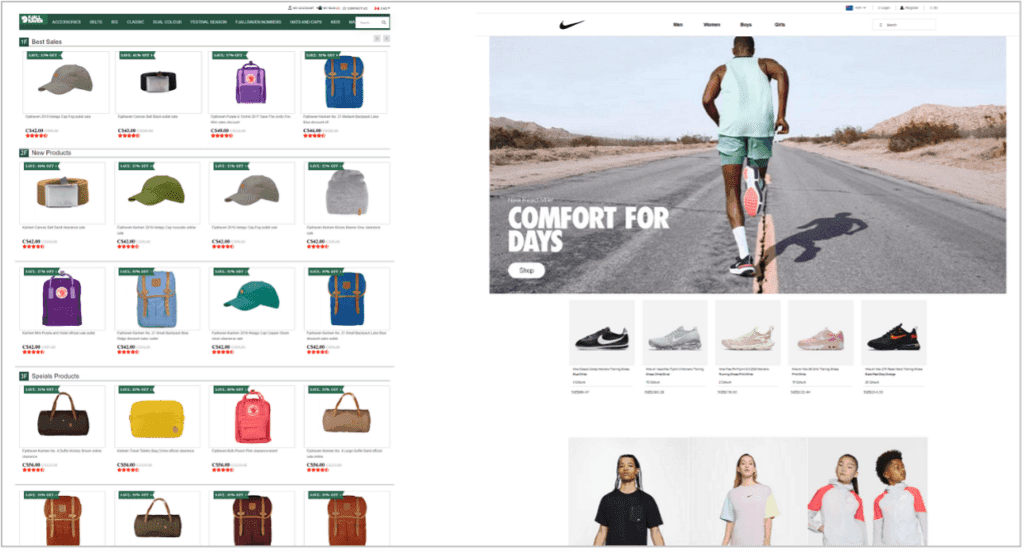
A fake shop selling luxury sporting goods
Survey scams
Survey scams are online forms that trick users into thinking they are being marketed to by a legitimate company or brand. The scams often look professionally designed and will impersonate established organizations using the target brands logos, fonts, colors and other design elements. Once again, these scams are used to lure victims into providing personal information (which the criminal will use to commit further crimes) in exchange for the chance to win a non-existent prize.
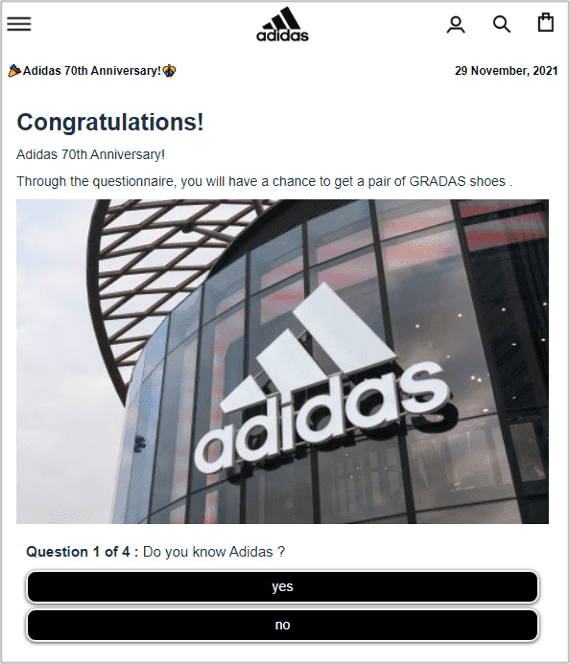
A survey scam purporting to be from Adidas
Social media impersonation
Attackers create fake social accounts on Facebook, X, TikTok and elsewhere, that pose as brands, executives, employees, or public figures. These profiles may promote scams, offer fake customer support, request payment, or direct users to malicious websites.
Phishing websites
Phishing websites are designed to look like legitimate brand websites. Attackers distribute links through email, text messages, social media, advertisements, or search results, then attempt to collect login credentials, payment information, or other sensitive data. For more examples, read 10 Real Examples of Phishing Websites (and How to Spot Them).
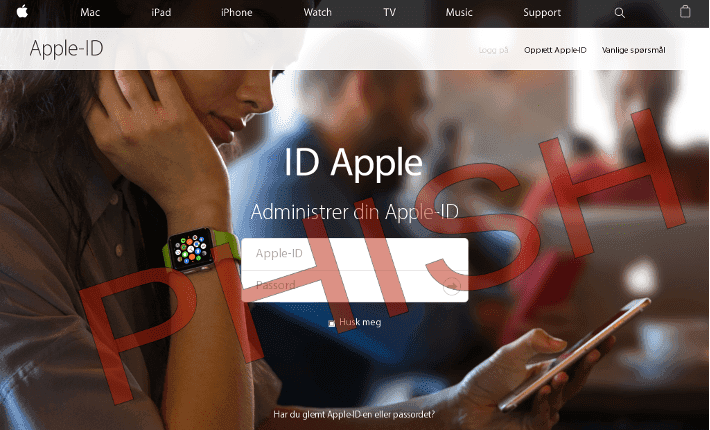
A phishing site that prompts victims to enter their Apple ID and password
Fake mobile apps
The popularity of apps has given rise to cybercriminals creating fake copies of official apps that impersonate legitimate organizations. The aim is, again, to gain access to their customers’ personal or financial details, which are often required when setting up the app. Criminals will take organizations’ official apps from the Google Play and the Apple App Store and redistribute copies with malicious code injected, allowing them to harvest user details from a seemingly official app.
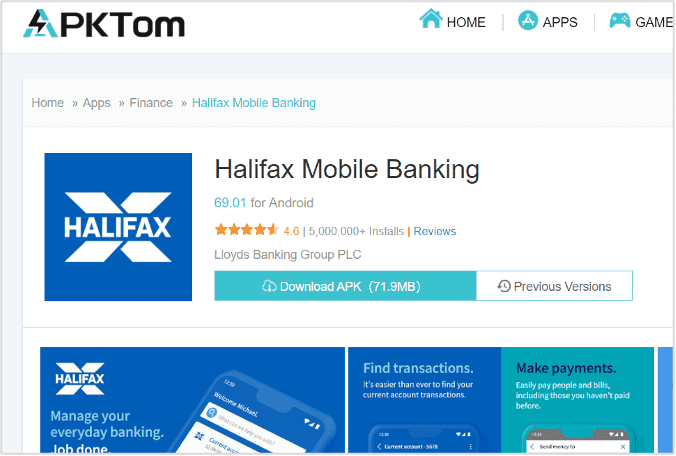
A phishing mobile banking app available to download on an unofficial app store
Shopping site skimmers
If a legitimate website has been compromised (usually by exploiting vulnerabilities in e-commerce platforms or third-party resources that retailers rely on), cyber criminals can place malicious code within the organization’s web page.
This allows criminals to perform a range of nefarious activities, both targeting the organization itself, and its customers visiting the site. This includes sending any payment details (or any other personal data) that have been entered during the checkout process to a website controlled by the cybercriminal, a technique known as skimming. The customer, of course, is completely unaware that this is happening.
Alternatively, the criminals might exploit browser vulnerabilities to drop malicious code onto customers’ computers which can be used for more advanced attacks. They could also deface the legitimate website (for example by injecting it with advertisements, or with malicious content designed to damage the organization’s reputation).
How online brand protection works
A strong online brand protection program should do five things:
Find suspicious activity across the channels where the brand appears.
Verify whether it is malicious, fraudulent, or unauthorized.
Prioritize the threats most likely to harm customers or the business.
Disrupt and remove the content through blocking, reporting, takedowns, and escalation.
Keep watching for the same threat returning elsewhere.
For a deeper dive on how modern brand protection programs operate, read the Brand Protection Field Guide.
What’s key to preventing online brand abuse?
Delivering this process at scale requires extensive automation, accurate threat intelligence, and experienced analysts who can step in when an attack needs further investigation or escalation.
Detection techniques
Manually tracking down malicious websites can be slow and ineffective. The best automated solutions will operate 24/7, searching the internet for misuse of your brand’s name and likeness (whether that’s the name, logo, tagline, domain, website address or social media profile) across a multitude of data sources.
Brand protection platforms need to be able to identify both established and innovative cyber attacks across a threat landscape that is constantly evolving. Brand protection platforms will require a combination of extensive domain knowledge and sophisticated automation to detect attacks with speed and accuracy, and should:
use advanced search techniques, including reverse image searches, for brand logos and suspicious images
maintain a list of ‘bulletproof’ hosting companies commonly used by criminals to facilitate cyber attacks
monitor email addresses, addresses, and phone numbers for the presence of commonly used tactics and tell-tale patterns of fake shops
discover link farms that cybercriminals used to boost SEO rankings of fake shop websites
Speed of response
When it comes to protecting your online reputation, speed of response is a critical factor. Before you’re even aware there’s a problem, a single fraudster could have established hundreds of fraudulent websites using your brand’s identity.
The best online brand protection platforms should be able to disrupt cyber attacks and block victims from accessing malicious sites within minutes. The malicious content itself should be removed within hours. This will ultimately require significant automation, so that the relevant third parties with the power to remove the content (such as hosting providers and domain registers) are notified as quickly as possible using the most appropriate channel.
Threat intelligence
Due to the sheer scale of online activity and the proliferation of digital channels, a brand protection platform will need to ingest millions of reports every day. This will include data from the cybersecurity reporting community, industry and government feeds, large-volume spam email datasets, and customers’ own reporting mechanisms.
Threat intelligence is the process by which this vast amount of data is filtered into operational insight, allowing malicious content to be identified, disrupted, and ultimately taken down. This requires heavily automated analysis, exploiting advances in machine learning and AI, with manual involvement limited to edge cases.
As we’ve discussed, there are hundreds of attack types, which presents brand protection platforms with a huge technological challenge in terms of analyzing masses of noisy data. All suspected attacks need to be validated, which means providing evidence of malicious activity to those organizations with power to takedown abusive content.
Expertise and experience
Technology and automation are of course essential, but they are only part of the solution. A brand protection platform should have the agility and experience to respond to new threats and attack types as they emerge.
Whilst automated systems will account for the majority of commodity attacks operating at scale, the ability to call upon cybercrime expertise – ideally with decades of experience and with established relationships with key internet infrastructure organizations – is equally important.
Extensive automation layered with human insight is key to a successful approach. Technical operational teams need to be able to step in to help with brand takedowns when a human touch is required, including making phone calls and liaising with webmasters, hosting companies and social media platforms.
Brand protection from Netcraft
Netcraft’s brand protection solutions are designed to offer quick response and resolution to cyber threats targeting your organization before they can cause extensive damage to brand value and customer trust. Netcraft protects brands in 100+ countries and performs takedowns for four of the ten most phished companies on the internet.
Netcraft’s brand protection platform operates 24/7 to discover phishing, fraud, scams, and other cyber attacks through extensive automation, AI, machine learning, and human insight. Our disruption & takedown service ensures that malicious content is blocked and removed quickly and efficiently, with a median takedown time of 33 minutes.
To find out how Netcraft’s platform can protect your brand and your customers, request a demo.
About Netcraft
Netcraft is the world leader in cybercrime detection, disruption, and takedown, and has been protecting companies online since 1996. We provide industry-leading brand protection through constant innovation, extensive automation, and unique insight.
At the core of Netcraft’s detection capability are highly effective searches across internet-scale datasets derived from decades of experience mapping the internet. Netcraft’s global feeds cover cybercrime targeting any institution, including non-customers, and are widely licensed by browsers and antivirus companies. These feeds drive the powerful detection of compromised sites hosting attacks which impersonate your brands.
Online Brand Protection FAQs
What is Online Brand Protection?
Online brand protection is the process of finding and acting on online threats that misuse an organization’s name, logos, products, or other brand assets. It helps protect customers and the business from phishing sites, fake social profiles, fraudulent stores, rogue mobile apps, malicious ads, and other forms of impersonation or abuse.
How Does Online Brand Protection Work?
Online brand protection typically involves five steps: finding suspicious activity, verifying whether it is harmful, prioritizing the threats that pose the greatest risk, disrupting or removing the content, and continuing to monitor for recurrence. Effective programs combine automated detection with human analysis, evidence gathering, provider escalation, and takedown workflows.
What is the Difference Between Brand Monitoring and Brand Protection?
Brand monitoring identifies mentions of a brand and possible signs of misuse. Brand protection goes further by verifying whether the activity is harmful and taking action to disrupt or remove it.
Monitoring provides visibility. Protection is focused on reducing exposure and resolving the threat.
Is Online Brand Protection the Same as Reputation Management?
No. Online brand protection focuses on malicious or unauthorized use of a brand, such as impersonation, phishing, scams, fake apps, and fraudulent websites. Reputation management focuses on public perception, including reviews, media coverage, customer sentiment, and how the brand is discussed online.
The two can support the same goal of protecting trust, but they address different risks.
What Types of Threats Does Online Brand Protection Cover?
Online brand protection can cover phishing and cloned websites, lookalike domains, fake social media profiles, executive impersonation, fraudulent online stores, malicious ads, rogue mobile apps, counterfeit activity, and scams that misuse a trusted brand.
The exact scope depends on the organization, its customers, and the channels attackers are most likely to exploit.
How Do Companies Protect Their Brands Online?
Companies protect their brands online by defining the assets they need to protect, monitoring the channels where abuse can appear, verifying suspicious activity, and acting quickly to disrupt or remove confirmed threats. Strong programs also establish clear ownership, takedown and escalation processes, and reporting that measures response speed, customer exposure, and recurring abuse.